🛡️ FIBC Products
UN Certified Big Bag
UN/ADR approved FIBC bulk bags (UN 13H1 to 13H4) enable safe international road, rail, and sea transport of solid dangerous goods.
Technical Specifications
UN Certified Big Bag Specs
UN Certificate
13H1 / 13H2 / 13H3 / 13H4
Packing Group
I, II and III
Capacity
500 - 1500 kg
Safety Factor (SF)
5:1 (single-use) / 6:1 (reusable)
Drop Test
1.8 m (PG I) / 1.2 m (PG II) / 0.8 m (PG III)
Top Lift Test
6× maximum net mass
Stacking Test
24 h, 1.8× stacking load
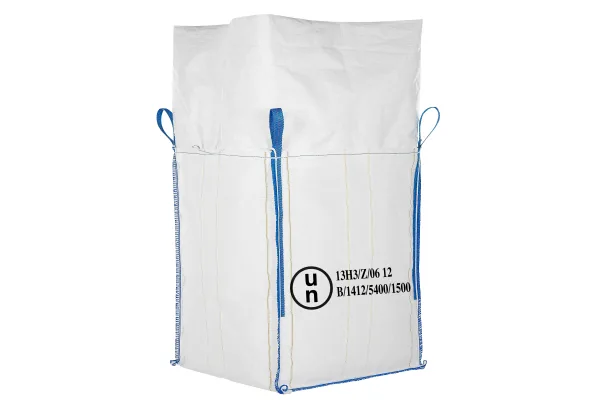
UN Marking
Permanent stamp/print
UN Certified Big Bag: Dangerous Goods Transport
UN certified big bag is a specialized FIBC designed and tested for international transport of dangerous goods.
Provides full compliance with United Nations dangerous goods transport regulations.
Why is UN Certification Required?
Dangerous goods (chemicals, flammable solids, corrosives) cannot be transported internationally in standard FIBCs.
Legal Requirement
- UN coded packaging is mandatory at customs clearances
- Controlled at ports
- Valid across all transport modes
What UN Certification Proves
UN tested big bags guarantee these properties:
- Withstands drop testing from specified heights
- Has sufficient lifting strength
- Maintains integrity under stacking loads
- Resistant to tearing and punctures
UN Codes
13H1 — Uncoated, Without Liner
Woven PP big bag without coating or liner.
- Suitable: Coarse-grained dangerous goods that are not sensitive to moisture
13H2 — Coated
Woven PP big bag with coated (laminated) fabric.
- The coating reduces fine-dust leakage
- Suitable: Fine-powder dangerous goods that do not need a liner
13H3 — With Liner
Woven PP big bag with an inner liner.
- The liner protects the product from moisture and external contamination
- Suitable: Moisture-sensitive dangerous goods in powder or granular form
13H4 — Coated and With Liner
Woven PP big bag with coated (laminated) fabric and an inner liner.
- The coating adds a barrier against fine-dust leakage and moisture
- Suitable: Hygroscopic or very fine powder dangerous goods
Packing Group Classes
UN big bags are tested and approved at the performance level of Packing Group I, II or III.
| Packing Group | Hazard Level | Drop Test | Marking Letter |
|---|---|---|---|
| PG I | High | 1.8 m | X |
| PG II | Medium | 1.2 m | Y |
| PG III | Low | 0.8 m | Z |
Note: Whether a substance may be carried in a big bag is determined by the ADR packing instruction assigned to its UN number; flexible IBCs (big bags) are authorised under packing instruction IBC08.
Permanent UN Marking
Each UN certified big bag is permanently marked with:
- UN standard compliance code (13H1 – 13H4)
- Packing Group information
- Test certificate number
- Manufacturer information
- Production date and lot number
UN certified big bags permanently feature:
- UN symbol (u and n in circle)
- Package code (e.g., 13H1/Y)
- Manufacturing date
- Manufacturer identification number
- Capacity and SWL information.
This information must remain visible and legible throughout the entire transport chain.
Customization Options
Configure to Your Needs
UN Liner
UN approved PE liner (13H3 / 13H4)
Antistatic Version
Type C conductivity + UN certification
Closed Loop
Closed loop lifting system
Double Wall
Double-layer fabric body
Reinforced Seams
Reinforced stitch lines
Product Gallery
UN Certified Big Bag
Application Areas
Where is UN Certified Big Bag Used?
Frequently Asked Questions
About UN Certified Big Bag
UN (United Nations) certified big bag is a tested and approved FIBC for international transport of dangerous goods. It's documented with UN code 13H1, 13H2, 13H3 or 13H4, depending on whether the fabric is coated and whether a liner is fitted. Provides compliance with ADR (road), RID (rail), IMDG (sea), and IATA (air) regulations.
Packing Group defines the hazard level of dangerous goods and the level at which the packaging is tested: PG I (marking letter X, drop test 1.8 m), PG II (Y, 1.2 m) and PG III (Z, 0.8 m). Whether a substance may be carried in a big bag is determined by the ADR packing instruction assigned to its UN number; flexible IBCs are authorised under packing instruction IBC08.
For UN certification, BAM (Bundesanstalt für Materialforschung und -prüfung) or an accredited laboratory performs: drop test, top lift test, stacking test, tear test, and righting test. Big bags passing all tests successfully receive a UN approval code.
All four are woven plastic big bags. 13H1: without coating or liner. 13H2: coated. 13H3: with liner. 13H4: coated and with liner. The coating and the liner add barriers against fine-dust leakage and moisture; selection depends on the properties of the substance.
UN certified big bags are generally classified as single-use; however, some products can be tested and approved as reusable (SF 6:1). For reuse, the big bag must not have sustained any damage, UN markings must remain legible, and it must be used for the same or compatible dangerous goods.
Related Products
Ventilated Big Bag
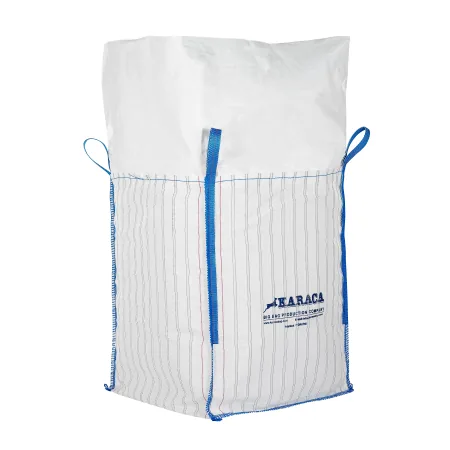
Ventilated big bags let the product inside breathe through ventilation openings across the fabric surface. They prevent sweating, mould and spoilage when transporting and storing produce that releases moisture and heat, such as potatoes, onions and firewood.

Liner (Inner Lining)
Big bag liners made from LDPE, MDPE, HDPE, EVOH, PA, conductive, and aluminum materials provide moisture barrier, gas impermeability, and product protection for food, pharmaceutical, and chemical industries.
Standard Big Bag (FIBC)
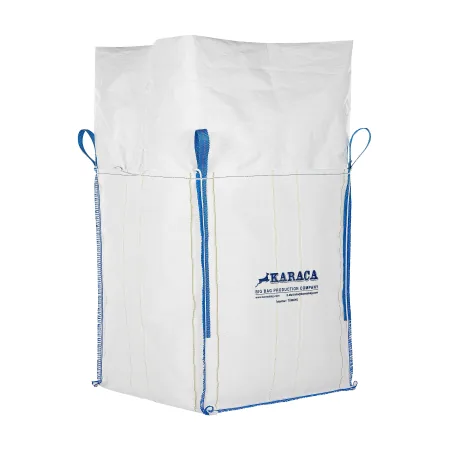
Woven polypropylene (PP) standard FIBC bulk bags with load capacities from 500 kg to 2000 kg provide safe bulk material handling across food, agriculture, chemical, and construction sectors.